Voter Suppression Then vs Now

By Ashley Hamilton 2025/2026 Power in Place Research Collaborator

Voter suppression has taken many forms throughout American history. Upon the United States declaring independence from Britain and becoming a new nation, citizenship and, therefore, voting rights were limited to free White men only. Mexican-American men were granted voting rights in 1848 after the passage of the Treaty of Guadalupe Hidalgo, in which they were legally defined as White. Twenty years later, citizenship would be extended to anyone, of any race, born or naturalized in the United States, but voting rights would still be limited to men. Jovita Idar and the women like her recognized the inequality and unfairness of being tax-paying citizens without the ability to vote. The Seneca Falls Convention in 1848 officially marked the beginning of the women’s suffrage movement. The convention was organized by Elizabeth Cady Stanton and Lucretia Mott. These two women made exceptional contributions to the suffrage movement, but the contributions of women of color are often left out of the narrative. Jovita Idar was a Mexican-American woman from Laredo, Texas, a small border town. She advocated for women’s right to vote and their right to be educated. Idar did much of her advocating through writing in newspapers and The Liga Femenil Mexicanista, an organization run by Mexican-American women that gathered for social and political causes. Jovita Idar did her activist work during the late 19th and early 20th centuries. Eventually, the work of Jovita Idar and the other suffragists throughout the United States paid off, and women were granted the right to vote with the passage of the 19th Amendment. This amendment prohibited the government from denying the right of citizens to vote based on sex. This amendment, in tandem with the 14th Amendment, virtually eliminated voter suppression in the United States. While it may have seemed that extending suffrage to people of color and women made voting rights equal, there were still barriers that existed for certain groups of people. These barriers were mainly in the form of poll taxes, literacy tests, and ballots only being offered in English. Jovita Idar’s activism did not only extend to rights for women, but also to rights for Mexican Americans. In the 1960s, Chicano rights groups formed and used similar methods to Idar to advocate for equal treatment. They created newspapers to inform the public about issues they faced, and they protested unequal treatment. One issue that they focused on was the voting barriers that were still in place and seemed to disproportionately affect low-income individuals and people of color. During this time, voting ballots were only offered in English, making it difficult for non-native English speakers to understand them. Literacy tests were protested for the same reason, and poll taxes were criticized because they inhibited those unable to afford the tax from being able to exercise their right to vote. Chicano rights groups, along with other civil rights groups, came together to get these barriers removed and to make elections freer and more equal. Eventually, the Voting Rights Act of 1965 was passed, which prohibited literacy tests, poll taxes, and required ballots to be offered in languages other than English. The Voting Rights Act of 1965 greatly increased the equality of voting rights in the United States. Elections in the country are still not perfect, however. Voter suppression in recent years has taken a different form and is “invisible” to most Americans. These barriers still primarily affect communities that consist primarily of people of color and low-income individuals. Low-income areas typically experience a lack of polling locations, meaning they have to travel farther distances to be able to vote. Some of these individuals may not have access to transportation to get to these polling locations. Another issue people often face is the inability to take time off from work to go vote. Election dates are held on weekdays, days when people are expected to work, and those who are paid hourly or who do not get paid time off may not be able to afford taking the day off to participate in the election. Modern efforts for voting rights activism look different from Jovita Idar’s methods due to the rise of social media and the declining popularity of newspapers. The public is typically informed of social injustices through social media platforms such as TikTok and Instagram, but public protests and boycotts have remained important tools for activists. There is currently no legislation in place or being proposed to combat these “invisible” barriers, but awareness is increasing due to activists’ efforts.

References

ACLU. 2021. “Block the Vote: How Politicians Are Trying to Block Voters from the Ballot Box.” American Civil Liberties Union. American Civil Liberties Union. August 17, 2021. https://www.aclu.org/news/civil-liberties/block-the-vote-voter-suppression-in-2020. League of Women Voters. 2018. “Fighting Voter Suppression | League of Women Voters.” Lwv.org. League of Women Voters. 2018. https://www.lwv.org/voting-rights/fighting-voter-suppression. Thomas, James. 2013. The Battle over Bilingual Ballots. Ashgate Publishing, Ltd. Coleman, Kevin. 2015. “The Voting Rights Act of 1965: Background and Overview.” Congress.gov. July 20, 2015. https://www.congress.gov/crs-product/R43626. “The Nineteenth Amendment and Women’s Suffrage Part 1: Introduction.” 2025. Congress.gov. 2025. https://www.congress.gov/crs-product/LSB10896. National Women's History Museum. n.d. “Woman Suffrage Timeline (1840-1920).” History of U.S. Woman’s Suffrage. https://www.crusadeforthevote.org/woman-suffrage-timeline-18401920. Kim, Connor. 2024. “Harvard Undergraduate Law Review.” Harvard Undergraduate Law Review. March 26, 2024. https://hulr.org/fall-2023/dkta39f7cgu0u4cbj9h0kw72760tkq. García, María-Cristina. 1995. “TSHA | Liga Femenil Mexicanista.” Www.tshaonline.org. March 1, 1995. https://www.tshaonline.org/handbook/entries/liga-femenil-mexicanista. Nancy Baker Jones Revised by Jessica Brannon-Wranosky, “Idar, Jovita,” Handbook of Texas Online, accessed October 29, 2025, https://www.tshaonline.org/handbook/entries/idar-jovita.

Ashley Hamilton is a junior at the University of Texas at El Paso (UTEP), majoring in History with a minor in Museum Studies. She works on the UTEP campus, helping students navigate the enrollment process and obtain financial aid. In her free time, she enjoys spending time with friends, baking, and reading. After completing her undergraduate degree, she plans on attending graduate school and doing museum work.

A Look Back at Josephine St. Pierre Ruffin

By Haley Plummer2025/2026 Power in Place Research Collaborator

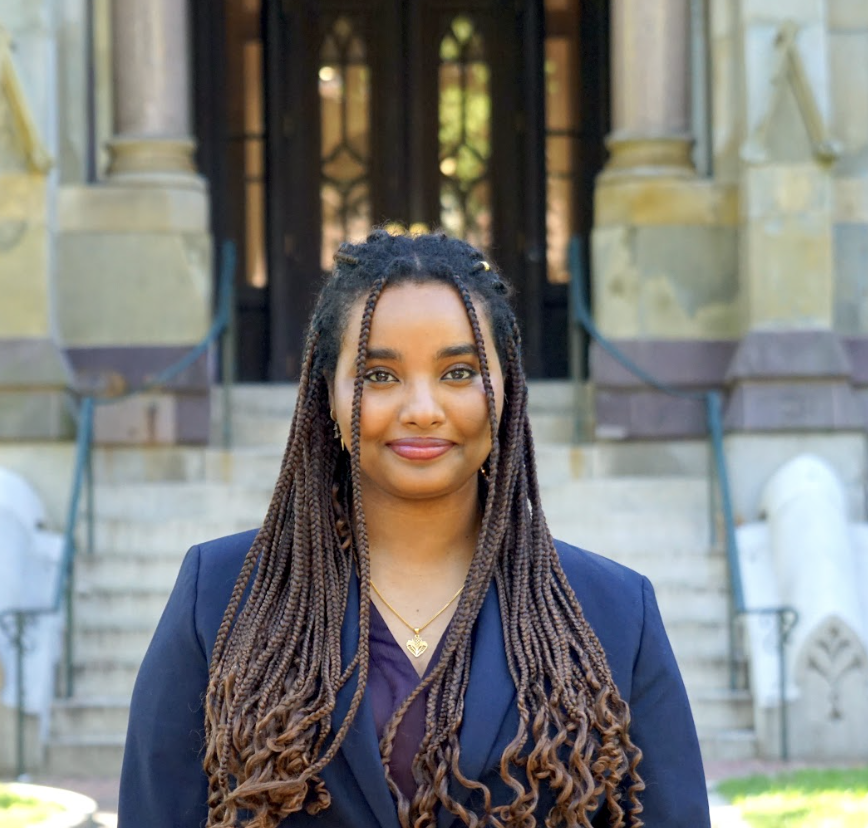
Josephine St. Pierre Ruffin is not a household name, but this says more about the historical record than it does about her impact. Historical records rarely detail the lives of Black women. Though she has not received the same recognition as her white contemporaries, Ruffin’s work is impossible to dismiss. At the risk of anachronism (indeed, she self-identified as a suffragist and abolitionist), Ruffin was nothing short of an intersectional feminist. Her structured, community-based approach to activism stands as a model for activists and politicians today. Born in 1842 to a white English mother and a Black father of Martiniquan heritage, Ruffin experienced blatant racism throughout her childhood. After marrying George Lewis Ruffin, the first African American man to graduate from Harvard Law School, she moved with him to England in hopes of raising their children in a society without slavery. For reasons unknown, the family shortly returned to the United States, where they would remain for the rest of their lives. Ruffin undoubtedly carried her experience abroad with her as she embarked on her work in Boston, allowing her transatlantic understanding of racism to inform her intercommunal approach to activism. Utilizing her position as a member of Boston’s Black elite, Ruffin founded the Woman’s Era Club, the city’s first African American women’s club, and served as its president. She also launched The Woman’s Era, a joint newspaper first published on March 24, 1894. At a time when Black women were either erased or caricatured in the press, Ruffin understood that political power began with narrative power. For three years, The Women’s Era highlighted Black achievement, crusaded for an end to lynching, and celebrated progress toward universal women’s suffrage. It created space for women to exchange political ideas, spotlight (and critique) prominent political figures, and address issues ranging from etiquette to health and exercise. Ruffin treated journalism not as neutral reporting, but as tangible resistance. By controlling the means of storytelling, she challenged racist coverage in mainstream newspapers. This feels strikingly contemporary, as Black journalists and creators today continue to confront institutional racism and create alternative spaces where they can control their own narratives. Ruffin’s commentary was markedly sharp in an era when women were expected to be obedient and removed from political life. In a particularly passionate article, Ruffin wrote: “If laws are unjust, they must be continually broken until they are killed or altered. The world is turning a callous ear to appeals for justice; it is evident that the only way now to get what we want is to take it, even if we have to break laws in getting it.” Meek and subservient, she was not. Throughout her life, Ruffin expertly navigated respectability politics even as white women’s clubs actively excluded her. Her activism exposed fractures within the suffrage movement, most notably when the General Federation of Women’s Clubs rejected the Woman’s Era Club after discovering that it accepted women of color. Nevertheless, Ruffin persisted. She championed bridge-building across racial lines, collaborating with organizations such as the New England Women’s Club, the American Woman Suffrage Association, the National Association for the Advancement of Colored People, and the Massachusetts Woman Suffrage Association. For Ruffin, institutions were both sites of learning and weapons of resistance. Her commitment to collaboration with all women exemplified her belief in community-building as a form of activism. This model of community-centered philanthropy reminds me of today’s methods of grassroots organizing. Ruffin balanced an international perspective with a dedication to local-level initiatives, ultimately leveraging her education and social position to create new opportunities for Black women. Her life reminds us: lasting change comes when we build together, speak up, and refuse to let others define our story.

References

Alexander, William H., Charles H. Ford, and Cassandra L. Newby-Alexander, eds. Voices from within the Veil: African Americans and the Experience of Democracy. Newcastle upon Tyne: Cambridge Scholars Publishing, 2008. https://research-ebsco-com.proxy.library.emory.edu/linkprocessor/plink?id=1385dadc-a32a-3fe8-ab6b-34f57fcee8a5. Terborg-Penn, Rosalyn. “African American Women and the Woman Suffrage Movement.” In One Woman, One Vote: Rediscovering the Woman Suffrage Movement, edited by Marjorie Spruill Wheeler, 147. Troutdale, OR: NewSage Press, 1995. “Josephine St. Pierre Ruffin | Massachusetts Women’s History Center.” 2025. Accessed October 25, 2025. https://www.mawomenshistory.org/josephine-st-pierre-ruffin. Sawaya, Francesca. Modern Women, Modern Work: Domesticity, Professionalism, and American Writing. Philadelphia: University of Pennsylvania Press, 2003. Streitmatter, Rodger. Raising Her Voice: African-American Women Journalists Who Changed History. Lexington, KY: University Press of Kentucky, 1994.

Haley Plummer is a rising Junior at Emory University, where she majors in History and minors in Latin American and Caribbean Studies on the pre-law professional track. She is passionate about visual culture, sustainable development, and community building. In the future, she'd like to pursue in the arts and culture nonprofit sector.

The Impact of Advocacy: The Relevancy of Beatrice Sumner Thompson's Activism Today

By Shravani Venkatesh 2025/2026 Power in Place Research Collaborator,

Beatrice Sumner Thompson, born on May 4th, 1874, in Boston, Massachusetts, was an American suffragist and activist. Thompson was born to James Beverly Beauregard Thompson and Medora Dora Gertrude Reed Thompson, marrying Samuel William Thompson in August of 1900 and settling in Chicago right after. Thompson was a civil rights activist of mixed-race descent, predominantly known for her leadership in the Los Angeles branch of the National Association for the Advancement of Colored People (NAACP). As the executive secretary of the NAACP's Los Angeles chapter from 1917 onward, she conducted investigations into racial violence and injustices, including events dispatched by the organization to document discrimination against African Americans. Her activism extended to women's suffrage rights, aligning her with broader campaigns for voting rights among Black women. Thompson's activism sets a strong example for the advocacy work that the youth can continue today. Not only did Thompson actively fight for women's rights, but she also was a part of multiple protests and demonstrated her passion for women's suffrage in several ways. She serves as an empowering role model, teaching women and individuals of all ages that they should fight for the causes that they believe in. By honing her work on a specific subject area, Thompson emphasizes the importance of creating a plan of action and joining leadership organizations that solidify one's interest in supporting a global issue in order to have a strong anchoring while working towards a resolution or movement.

References

“Beatrice Sumner Thompson | Alexander Street Documents,” n.d. https://documents.alexanderstreet.com/d/1007600800. in. 2025. “Talking about Women’s History: Three Questions and an Answer with Jennifer Tuttle – History in the Margins.” Historyinthemargins.com. March 19, 2025. https://www.historyinthemargins.com/2025/03/19/talking-about-womens-history-three-questions-and-an-answer-with-jennifer-tuttle/. “African Americans-Suffrage Archives - Theodore Roosevelt Center.” 2025. Theodore Roosevelt Center. 2025. https://www.theodorerooseveltcenter.org/subject/african-americans-suffrage/.\

Shravani Venkatesh is a sophomore majoring in political science and global studies and minoring in music. She is passionate about international and family law as well as advocacy, spending her time as a JusticeCorps legal intern and as the Membership Chair of the United Nations Association at UCLA. Outside of academics, she is a part of an a capella group and loves to binge watch shows.

From Privilege to Protest to the Classroom: Margaretta Forten Forten’s Stand Against Slavery and the Denial of Suffrage

By Dylan Gaffey 2025/2026 Power in Place Research Collaborator, 2025/2026 Power in Place Research Collaborator

I’ve spent weeks immersed in research, and choosing to study Margaretta Forten—one of the remarkable women of color who fought for suffrage—has been both challenging and transformative. Born in 1808 in Philadelphia, Pennsylvania, Forten grew up in a free Black family and was the daughter of one of the most prominent Black abolitionists of the early 19th century. Her home was a hub of abolitionist activity, exposing her to influential figures like William Lloyd Garrison and other reformers. As a Black woman, Forten not only faced the harsh realities of racism but also the added obstacle of gender discrimination, as women were denied the right to vote and had no say in the laws that shaped their lives. From a young age, she observed the power of activism and leadership, which inspired her own lifelong commitment to justice. Margaretta Forten was born on September 11, 1808, to James Forten and Charlotte Vandine Forten. Her father, a wealthy sailmaker and revolutionary-era activist, was deeply involved in the abolitionist movement, while her mother came from a free Black family in Pennsylvania. Margaretta was the eldest child in a household that nurtured both intellectual curiosity and civic responsibility. Her childhood home at 92 Lombard Street in Philadelphia was filled not only with her siblings but also with apprentices, household staff, and frequent visitors who were active in social reform (Forten, 2011). From witnessing legal matters as a child to engaging with influential reformers, Margaretta was immersed in activism from the start. Education played a pivotal role in Forten’s development. In 1819, her father, along with Grace Douglass, opened a school for Black children, hiring Britton E. Chamberlain as a teacher. Margaretta also studied at home under the guidance of family friends, including Sarah Mapps Douglass, and attended the Clarkson School alongside her brothers (Forten, 2011). She learned French and received a remarkably well-rounded education for a free Black girl at the time, although she did not attend college. Despite recurring respiratory illnesses, likely tuberculosis, she persisted in her studies, demonstrating resilience that would define her later activism. In 1833, Margaretta and her family recognized the need for Black and white women to take leadership in social reform. Alongside her mother and sisters—Harriet, Sara, and Mary Isabella—she co-founded the Philadelphia Female Anti-Slavery Society (PFASS), the first interracial women’s abolitionist organization in the United States. Margaretta helped draft its constitution and organized petitions, fundraising efforts, and community education initiatives (Forten, 2011). That same year, the white abolitionist Samuel J. May escorted her to her first anti-slavery meeting, marking the beginning of her active public engagement. Her poetry, such as the 1834 publication in The Emancipator declaring “DOWN WITH OPPRESSION! FREEDOM IN ITS STEAD!”, reflected both her literary talent and unwavering commitment to the abolitionist cause (Forten, 2011). Forten’s activism extended beyond abolition. Education was another arena where she made a lasting impact. In 1845, she became principal of the Lombard Street Primary School, running one of the first schools for free Black children in Philadelphia for over three decades. Her teaching not only educated young minds but also mentored the next generation of leaders, including her niece, Charlotte Forten Grimké (BlackPast.org, 2008). Through her work in education, Margaretta demonstrated that women could be both “proper” in society’s eyes and powerful agents of change. The intersection of race and gender shaped much of Margaretta Forten’s activism. Even in Northern cities like Philadelphia, opportunities for Black children and women were limited. Black women were largely excluded from leadership roles in mainstream abolitionist organizations, and universal suffrage was far from reach. Margaretta’s efforts with PFASS and her work in education directly addressed these inequities, creating spaces where women of color could lead, organize, and be heard (Forten, 2011). Her leadership was groundbreaking: she became one of three executors of her father’s will in 1836, handling property deals and legal matters—a role rarely entrusted to women at the time. Throughout her life, Forten collaborated with both Black and white reformers, attending national conventions and representing Black women’s perspectives. She supported parallel movements, such as the broader abolitionist movement, and during the Civil War, she helped her sister Charlotte by sending clothing and supplies to support freedmen being educated in the South (Forten, 2011). These efforts highlight how her activism transcended a single cause, combining education, abolition, and suffrage into a lifelong mission to expand justice. Forten’s commitment to women’s rights, education, and abolition illustrates an unyielding defiance of societal expectations. At a time when women were expected to remain quiet and “lady-like,” Margaretta boldly spoke out and organized spaces for leadership. She showed that being a lady and a revolutionary were not mutually exclusive. Her “unladylike” spirit paved the way for future generations of Black activists, including Ida B. Wells and Mary McLeod Bethune, demonstrating the enduring power of women of color to reshape society (Forten, 2011). Despite her many accomplishments, Margaretta Forten received no formal awards during her lifetime. Yet her legacy is profound. She helped dissolve PFASS in 1870 after decades of activism, affirming that the society had fulfilled its mission. She passed away on January 14, 1875, from pneumonia, leaving behind a life defined by courage, intellect, and moral conviction (Forten, 2011). While she did not live to see universal suffrage achieved for Black women—the 19th Amendment in 1920 only granted voting rights to women broadly, with the Voting Rights Act of 1965 finally ensuring meaningful access—her work laid the foundation for those victories (National Park Service, 2025; Library of Congress, 2025). Margaretta Forten’s story resonates because it demonstrates the power of persistence, intellect, and community in the face of systemic barriers. Her life reminds us that activism often begins at home, with education and family, and grows outward into movements that reshape society. In every act of teaching, petitioning, or organizing, Forten challenged the status quo and inspired others to do the same. She was a pioneer who bridged gaps between race, gender, and social reform, leaving an indelible mark on American history. Through research on her life, one sees how interconnected the fight for racial justice and women’s rights has always been. Margaretta Forten’s story is not only a historical record but also a source of inspiration for modern activism. It calls attention to the power of standing up in the face of exclusion, using one’s voice and talents to create opportunity, and insisting on equality as a right, not a privilege. Today, her legacy lives on in the continued fight for social justice and education for all—a testament to a woman who refused to remain invisible and helped pave the way for generations to come.

References

- BlackPast.org. “James Forten (1766–1842).” Last modified March 22, 2008. https://www.blackpast.org/african-american-history/forten-james-1766-1842/ - Forten, Margaretta (1808–1875). Encyclopedia of Women and American Politics. Edited by Lynne E. Ford. 2nd ed. New York: Facts On File, 2011. https://www.encyclopedia.com/women/encyclopedias-almanacs-transcripts-and-maps/forten-margaretta-1808-1875 - Library of Congress. “African Americans and the Vote.” Accessed December 25, 2025. https://www.loc.gov/classroom-materials/elections/voters/african-americans/ - National Park Service. “Black Women and the Fight for Voting Rights.” Accessed October 25, 2025. https://www.nps.gov/articles/black-women-and-the-fight-for-voting-rights.htm

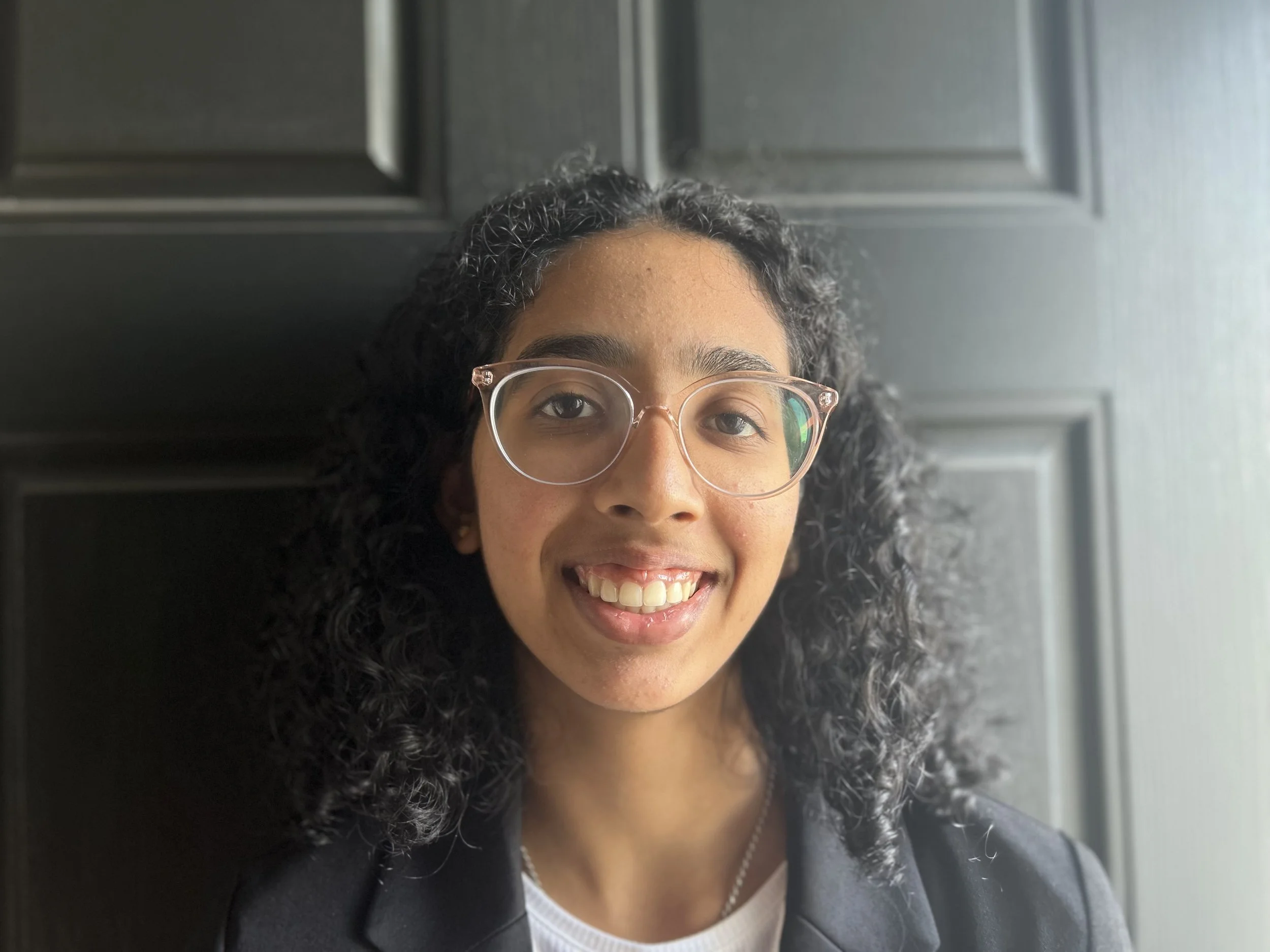
Dylan Gaffey is a junior at Adelphi University majoring in Political Science with a minor in History. He is deeply engaged in public policy and American politics, with a particular focus on the rise of populism across both the left and right of the political spectrum. Dylan has a strong passion for campaign finance reform and believes that systemic injustices such as the mass incarceration of people of color represent one of the most significant civil rights crises and a modern-day continuation of Jim Crow in his generation.

Maggie Lena Walker: Financial Pioneer, Suffragist, and Advocate

By Srisha Nannapaneni, 2025/2026 Power in Place Research Collaborator

In 1903, Maggie Lena Walker led the founding of the St. Luke Penny Savings Bank, becoming the first African American woman to be president of a bank in the United States. This is the legacy she is best remembered for—as a pioneer for women in the banking industry, she pushed for women’s financial independence and successfully led her bank for over twenty years. Yet in her lifetime, she also advocated for racial equality, voting rights for women, and education for young women. Walker’s story is nothing short of extraordinary. Born in Richmond and raised for much of her childhood by a single mother, she later described herself as having been born with a “clothes basket almost upon [her] head.” She had no formal education past high school, and her experience in the financial sector was limited to her time observing the procedures of the white-owned Merchants National Bank. But she had a vision of a bank that encouraged economic independence for African Americans, and she was determined to see it through, despite the racial and gender discrimination she faced. Walker joined the Independent Order of Saint Luke, an African American organization focused on helping the community, when she was just 14. By the time she turned 17, she was an elected officer. Before founding the St. Luke Penny Savings Bank in 1903, she chaired the organization's Juvenile Department, started its weekly newspaper that promoted universal suffrage, and held its highest executive officer position. The chartering of her bank may have been the pinnacle of her success, but it was far from the only contribution she made to her community. She founded the Richmond Council of Colored Women in 1912, raising money for the Virginia Industrial School for Colored Girls. She cofounded the Richmond chapter of the NAACP in 1917. She helped raise funds for the Piedmont Sanitarium, the first state facility to treat African Americans with tuberculosis. After the passage of the 19th Amendment in 1920, she led education sessions and voter registration campaigns directed at African American women. In 1921, she became the first African American woman to run for state office in Virginia, joining an all-Black ticket as the candidate for Superintendent of Public Instruction in response to the all-white ticket put forth by the Republican party. The impact Maggie Lena Walker had cannot be overstated. Her work left a lasting legacy, inspiring people not only in her direct community, but across the country as her story spread. What began as a young girl’s desire to help those around her grew into a lifelong fight for the causes she believed in, whether that was financial independence or the right to vote. Her story is proof that nowhere is too small to start, and that all we need to make a lasting impact is a willingness to do good. As Walker said: “Somebody must speak. Somebody must cry aloud.” Only by raising our voices and standing together can we achieve meaningful progress and work towards making the world a better place.

References

“Maggie Lena Draper Mitchell Walker.” Directory of Virginia Biography. Library of Virginia, published 2020, revised 2023. https://old.lva.virginia.gov/public/dvb/bio.asp?b=Walker_Maggie_Lena “Maggie Lena Walker, c. 1926-1930, Photographer Scurlock.” National Park Service. https://www.nps.gov/media/photo/gallery-item.htm?pg=3565365&id=20ae843c-155d-451f-677a-36d67674b501&gid=FCD94BC0-5C32-4072-9B74-78E4A7D7ED02 “Memorable Quotes from Maggie L. Walker.” National Park Service, revised September 17, 2025.

https://www.nps.gov/mawa/learn/historyculture/memorable-quotes-from-maggie-l-walker.htm “The St. Luke Penny Savings Bank.” National Park Service. Accessed January 21, 2026. https://www.nps.gov/mawa/the-st-luke-penny-savings-bank.htm?scid=4yDZ5aAgRwj

Srisha Nannapaneni is a first-year at the University of Virginia. She is still undecided about her major, but she is passionate about social justice and public policy. In her spare time, Srisha enjoys reading, baking, and going on long walks.

Ida B. Wells' Chicago Political Legacy

By Kylan Elliott, 2025/2026 Power in Place Research Collaborator

The impact of Ida B. Wells can be seen far and wide, as she dedicated her life to the fight for universal suffrage and an end to racial inequality. But the city of Chicago was her home-base, and she has left an indelible mark on this community that lives on almost a century after her death. Wells moved to Chicago at the age of 31 after she had traveled abroad to give speeches against lynching. When she arrived in the city, she quickly cemented herself as a community organizer and staunch activist. One of the first things she did was work on the campaign of a woman named Lucy Flower, who was running for the trustee role at the University of Illinois. She won, and became the first woman in the state of Illinois to hold a statewide elective office, setting a precedent for countless women in the future to follow in her footsteps. 1913 was a pivotal year for Wells. This year she founded the Alpha Suffrage Club, which was an organization created for specifically uplifting black women in the sphere of politics. The ASC offered education for black people on civics and leadership skills and worked on campaigns for black politicians. There was an aldermanic primary in February of 1914, and the Alpha Suffrage Club worked tirelessly canvassing in the predominantly black wards of Chicago to get DePriest the votes he needed. As a result of Wells’ efforts, DePriest ended up becoming the first black alderman in the city, and women made up around a third of his votes. In 1929, DePriest was elected to the House of Representatives in Illinois' 1st District, becoming the first African American in the 21st century to be elected to Congress. The elections of DePriest showed that black people and women have the ability to become an extremely powerful force with their votes, and this held true in the 1916 Presidential Election. In previous years, the Alpha Suffrage Club did a tremendous amount of work lobbying the Springfield legislature to pass laws that moved Illinois closer to true universal suffrage. The Illinois Equal Suffrage Act was passed in 1913, an achievement that the efforts of Wells and the ASC greatly helped to realize. This Act allowed women in Illinois to vote for the President, as well as local officers. According to an article from the New York Times, over 800,000 women in Illinois cast their vote for President in the 1916 election. They tended to vote in favor of the more progressive Hughes, with Hughes Alliance associate Harriet E. Vittum stating that “Illinois women voters showed their way to the women of the country by giving Hughes a strong majority of their votes” (NYT). Not only did Wells have a big part to play in women obtaining the right to vote in Illinois, but she helped them utilize their voices effectively. The Alpha Suffrage Club along with its leadership training also helped black women register to vote and walked them through the voting process. Her efforts were greatly important to get black women a bigger voice in politics, and her later work helped them to utilize that voice effectively. Wells and the Alpha Suffrage Club paved the way to the Chicago we see today. In 2026, there are 20 black members of Chicago’s city council, and countless women’s organizations in the city. The legacy of Wells continues to shape the politics of Chicago, and the lives of all who have lived here.

References

Norwood, Arlisha. “Ida B. Wells-Barnett.” National Women’s History Museum, 2017, www.womenshistory.org/education-resources/biographies/ida-b-wells-barnett . Britannica Editors. “Lucy Louisa Coues Flower | American Philanthropist & Social Reformer.” Encyclopedia Britannica, 30 June 1999, www.britannica.com/biography/Lucy-Louisa-Coues-Flower. Accessed 21 Jan. 2026. Nettles, Arionne. “Ida B. Wells’ Lasting Impact on Chicago Politics and Power.” NPR, 4 Nov. 2019, www.npr.org/local/2019/11/04/775915510/ida-b-wells-lasting-impact-on-chicago-politics-and-power. ‌ “The Persistence of Ida B. Wells: Reform Leader and Civil Rights Activist | Gilder Lehrman Institute of American History.” Gilderlehrman.org, 2019, www.gilderlehrman.org/history-resources/essays/persistence-ida-b-wells-reform-leader-and-civil-rights-activist. ‌ “Illinois Suffrage Act (1913).” Ilsos.gov, 2025, www.ilsos.gov/departments/archives/online-exhibits/100-documents/1913-il-suffarge-act.html. “Praise for Women Voters in Illinois.” New York Times, New York Times, 9 Nov. 1916, timesmachine.nytimes.com/timesmachine/1916/11/09/104694343.pdf?pdf_redirect=true&ip=0. Rima Lunin Schultz, and Adele Hast. Women Building Chicago 1790-1990. 2001. ‌“About Us – Chicago City Council Black Caucus.” Chicagoblackcaucus.com, 2026, chicagoblackcaucus.com/about-us/. Accessed 21 Jan. 2026.

Kylan Elliott is a sophomore at Loyola University Chicago studying Political Science, International Business, and Psychology. She is passionate about social justice, law, and music. After university, she hopes of going onto law school and pursuing a career in family law. In her free time, she enjoys going to concerts, reading, and exploring the city of Chicago.


Women Carving a Legacy of Firsts

By Aleena Malik, 2025/2026 Power in Place Research Collaborator

A woman known for many firsts, paving the way for like-minded African American women to rise into leadership, Margaret Briggs Gregory Hawkins wasn’t just partaking in history; she was shaping it. She was building the infrastructure that enabled progress. In a time when Black women were expected to stay silent, she pushed a revolutionary passion that insisted that full political rights were not a favor to be granted, but a right to be claimed. Hawkins was a founding member and the first president of the DuBois Circle, and by 1913, she was already serving on the Baltimore NAACP executive committee. Her leadership didn’t stop there. She became vice president of the Colored Women’s Suffrage Club of Maryland (1920–1921) and then president of the Cooperative Women’s Civic League (1921). In 1926, she joined the Baltimore Urban League’s executive committee, and from 1933 to 1945, she made history again as the first Black woman on the Board of Managers of the Maryland Training School for Colored Girls, serving two six-year terms. In 1943, she broke another barrier as the first Black woman on the YWCA Central Branch (Baltimore) executive board. That list of “firsts” matters, but what matters even more is what those firsts did: they opened doors, normalized Black women’s authority, and proved that leadership could look different than what society had been pushing for people to believe. Connecting Hawkins to the present starts with understanding what she was really fighting for: an egalitarian society, a society where people are equal. In Hawkins’ world, inequality wasn’t just social; it was built into the government, their surroundings, and most importantly, the ballot box. Even after the 19th Amendment passed, voting was not automatically “equal” in practice for Black women. That’s why Hawkins’ work didn’t end when the amendment did. She understood something that modern voting-rights campaigns still repeat today: rights on paper hold no power if people aren’t able to use them. That is why she valued and taught civic engagement, and the importance of that education is seen today as so many voting-rights efforts focus on the same core idea Hawkins championed: civic education as protection. Modern organizations run voter registration drives, teach first-time voters, fight misinformation, and help communities navigate rules that can feel confusing on purpose. Hawkins did the same kind of work as an educator, teaching women how to use their vote to create change, not just celebrate the existence of the right. She gave them the tools for prosperity when society expected them to fail. Her strategy mirrors what we still see now: real democracy depends on people being informed and can only flourish when people participate.

Hawkins’ story also echoes in current conversations about representation. Her “firsts” weren’t symbolic; they were proof that Black women belonged at decision-making tables. That idea continues today when Black women step into leadership roles that historically excluded them. For example, in 2019, Adrienne A. Jones became the first woman and first African American to serve as Speaker of the Maryland House of Delegates. That moment wasn’t random; it reflects the kind of path Hawkins helped carve, one where Black women are not just supporting movements, but leading chambers, shaping policy priorities, and pushing public institutions toward racial justice. What moves me about Hawkins is that her work shows how progress is usually made: not by one dramatic moment, but by patient, strategic pressure over time. She faced uncertainty, hardship, and oppression, yet she still chose to organize and to lead. She, after so much hardship and fighting, chose to believe that Black women deserved full political power regardless of whether someone was willing to give it to them completely. That unwavering stance is exactly what modern campaigns for equality are still built on. In the end, Margaret Hawkins didn’t just fight for her own success. She fought to make leadership and political rights the norm for the women who came after her. Her legacy lives whenever civic engagement is being taught to the youth and when women of color step into leadership, proving that reclaiming power is truly how revolutions and change begin.

 References

Brennan Center for Justice. (n.d.). Voter suppression. Retrieved January 20, 2026, from https://www.brennancenter.org/topics/voting-elections/voter-suppression DePuyt, B. (2019, May 1). After intense battle, Jones emerges as compromise choice for speaker. Maryland Matters. https://marylandmatters.org/2019/05/01/after-intense-battle-jones-emerges-as-compromise-choice-for-speaker/ Maryland Department of Human Services. (2021). Maryland Women’s Hall of Fame Hawkins. https://dhs.maryland.gov/maryland-womens-hall-fame-hawkins/ Maryland Department of Human Services. (2024). Maryland Women’s Hall of Fame Awardees Jones. https://dhs.maryland.gov/maryland-womens-hall-fame-awardees-jones/ Maryland Historical Trust. (n.d.). Margaret Briggs Gregory and Dr. Mason Albert Hawkins House (B-1373-6), 1532 Druid Hill Avenue, Baltimore City: Maryland Inventory of Historic Properties form [PDF]. https://apps.mht.maryland.gov/medusa/PDF/BaltimoreCity/B-1373-6.pdf Maryland State Archives. (2023). Margaret Briggs Gregory Hawkins. Maryland Women’s Hall of Fame Biographies. https://msa.maryland.gov/msa/educ/exhibits/womenshallfame/html/mhawkins.html Maryland State Archives. (n.d.). Adrienne A. Jones, Maryland State Delegate. Maryland Manual On-Line. https://msa.maryland.gov/msa/mdmanual/06hse/html/msa02630.html National Park Service. (2024, July 9). National Register of Historic Places continuation sheet: Sharp Street Memorial U.M. Church (B-2963), Baltimore City, Maryland (NR reference no. 82004749) [PDF]. https://apps.mht.maryland.gov/medusa/PDF/NR_PDFs/NR-689.pdf Norwood, C. (2019, May 2). First African American and woman to serve as Maryland House speaker. Governing. https://www.governing.com/archive/tns-new-maryland-house-speaker-adrienne-jones.html Novara, E. A. (2020, August 26). The suffrage struggle after the 19th Amendment. Library of Congress Blogs. https://blogs.loc.gov/loc/2020/08/the-suffrage-struggle-after-the-19th-amendment/

The Cost of Defiance Isn't Equal: What Helen Augusta Howard's Story Reveals About Race and Resistance

By , Archita Gaur, 2025/2026 Power in Place Research Collaborator, 2025/2026 Power in Place Research Collaborator

Helen Augusta Howard wore pants in 1890s Georgia. She declared herself an atheist in the deeply religious South. She refused marriage, cut her hair short, and founded the Georgia Woman Suffrage Association at age 25. For these acts of defiance, she paid dearly: ostracized by her community, financially cut off by her brothers, and eventually driven from Georgia entirely. Her gravestone reads "MARTYRED." Howard's courage was real and her sacrifices were significant. But her story also reveals an uncomfortable truth. The cost of defiance has never been equal, and neither has the freedom to defy. When Howard wore pants and shorter skirts, she was called scandalous and unladylike. When she rejected traditional femininity, she embarrassed her prominent family. However, she could reject these norms because she had the racial privilege to do so without facing violence. Her behavior challenged gender expectations but it never threatened white supremacy. Meanwhile, Black women in Georgia were organizing their own suffrage efforts through the National Federation of Colored Women's Clubs. Leaders like Lugenia Burns Hope and Lucy Laney fought for voting rights while navigating a world where any perceived defiance of racial hierarchy could mean death. They couldn't afford to be "unladylike" in the ways Howard was. Their resistance had to be strategic, coded, and constantly aware of the violence that policed Black women's behavior in ways white women never experienced. When the 19th Amendment passed in 1920, white Georgia women voted statewide by 1922. Howard's exclusion was temporary. Her suffrage was eventually won. Black women in Georgia faced decades more of Jim Crow: literacy tests designed to fail them, poll taxes they couldn't afford, and the threat of violence at polling places. The cost of defiance isn't equal because the systems of power aren't equal. Gender oppression is real. But it's amplified, complicated, and made more dangerous by race, class, sexuality, and even citizenship status. Helen Howard was brave. She sacrificed. She paved roads others would walk. She challenged the men who silenced her but not the racial hierarchy that protected her even as it crushed others. Her story matters precisely because it's incomplete. It reminds us that defiance without solidarity is partial liberation. That true freedom requires dismantling all hierarchies not just the ones that limit us personally. That's the unfinished work. And it's ours to complete.

References

https://documents.alexanderstreet.com/d/1010026835 https://www.historiccolumbus.com/post/augusta-howard-and-the-women-s-suffrage-marker-dedication https://theclio.com/entry/165969 https://suffragistmemorial.org/suffragists-in-georgia/ https://www.nps.gov/articles/georgia-and-the-19th-amendment.htm

Archita Gaur is a junior at the University of Georgia majoring in Political Science and Economics. On campus, Archita is involved with Mock Trial, the Arch Policy Institute and the AI Society at Terry. She also serves as a Frye Fellow at the Georgia House of Representatives.

The Visionaries of Yesterday and the Dreamers of Today

By Catalina Giraldo, 2025/2026 Power in Place Research Collaborator

Emigrating from Colombia to the United States at a young age was supposed to be my salvation. I, like many other immigrants from Latin America, was brought to the U.S. under the promise of improved conditions, including access to higher education, financial stability, and political freedom. Most importantly, I was promised that in the U.S. I would have “a future” – a prospect that was unparalleled in any other nation – so long as I stopped dreaming of returning home. Of those promises, some were delivered while others have been explicitly refused to me, and many other immigrants, since. Just in the last year, immigrants from Latin America have been placed under a political spotlight and deemed a threat to the safety and cultural integrity of the nation. This condemnation has justified imposing harm onto this community in the form of illegal apprehensions, physical violence, family separations, and deportations – leaving many immigrants afraid to leave their homes, report crimes, or receive medical attention. Seeing the widespread support for the enactment of violence against immigrants, I have found myself rethinking that promise of a future. Similarly, I have noticed other immigrants (both first and second generation) wonder if the United States holds a safe and prosperous future for them. Many other marginalized groups share similar concerns. Following the overturn of Roe v. Wade and the enactment of abortion bans across several states, women with reproductive capacities have less control over their bodies and face greater challenges to their health and well-being. Simultaneously, Black and Brown people who have experienced systemic violence at the hands of police officers have to wonder if the United States could one day bring an end to the police state in order to deliver justice and safety to their communities.

This, however, is not the first time when people have found themselves at a crossroads: pushed by systemic dehumanization and political turmoil to reimagine their future. While deciphering my vision for the future, I began researching the life and works of Mary Ann Shadd Cary: a writer, educator, and community organizer in the mid-to-late 19th century. Through her work as the chief editor of the Provincial Freeman and her role as an organizer for women’s suffrage, Mary Ann Shadd Cary challenged unjust systems to expand the possibilities for both people of color and women. Her vision of freedom would not only lead her to migrate across the U.S.-Canada border, but it would also bring her back to fight for women’s suffrage. Mary was born in 1823 to free parents Abraham Doras and Harriet Shadd, who lived in the (at the time) slave-owning state of Delaware. Abraham and Harriet were key players in the Underground Railroad, as their home was one of the stops in many people’s journey towards liberty. Beyond caring for and housing people escaping slavery, Mary’s parents were leaders in the advancement of rights and freedom for people of color: Abraham served as the President of the National Convention for the improvement of Free People of Color and helped found the American Anti-Slavery Society in 1833.iii In that same year, the family moved to West Chester, Pennsylvania, so that their children could receive an education. In West Chester, Mary fell in love with education, and she extended that devotion by returning to Delaware in her late teens to establish a public school for black children.iv She continued to expand this dream to children in the Northeast by teaching in New York City, New Jersey, and Pennsylvania throughout the 1840s.iii Being raised by parents who dedicated their lives to the advancement of people of color, Mary learned that walking towards safety, freedom, and justice began with expanding the boundaries of one’s imagination. Mary believed that communities of color should secure their own means to achieve advancement and self-sufficiency. The realization of this vision in the United States, however, was delayed by the political turmoil of the time. In particular, the passage of the Fugitive Slave Law (1850) threatened the safety of communities of color, since under the loose provisions of this code, almost any person of color (born free or into slavery) could be caught and enslaved; consequently, many families began looking further north in search of freedom from bondage. Seeing her liberty and well-being threatened by this policy, Mary migrated to West Canada in the Fall of 1851.iii In Canada, she found a newly arrived community of fugitives in shambles. Grounded in her vision for advancement, she helped establish institutions to promote settlement and self-sufficiency in this community, such as schools and a newspaper named the Provincial Freeman. Most notably, during her early years in Canada, she published a small booklet titled Notes on Canada West. This piece outlined all aspects of life in Canada to prospective migrants from the U.S. – from the price of land to the political rights of immigrants. Mary Ann’s pamphlet responded to the backsliding of the U.S. government and the threat this posed to her community by outlining an alternative path towards safety and Black liberation. Although Mary was criticized for abandoning the anti-slavery project in the U.S., she remained faithful to her vision of freedom for all people of color. Through organizing, she constructed a new homeland for those who did not feel safe in the U.S. while continuing to invest in the liberation of people in her motherland through her written work. Her vision for a better tomorrow for people of color is carried by immigrants and other marginalized groups today. We dream, as Mary Ann Shadd Cary envisioned over a century ago, of building a nation that upholds the rights and freedoms of marginalized people. We imagine a nation that treats its most vulnerable citizens justly, and we work to bring that vision into reality. It may not be brought on today, but we will continue to live with the hope that it could be tomorrow. In this way, the legacy of Mary’s courageous imagination lives on in many immigrant advocacy groups, women’s associations, and black radical women.

References

“Abortion Bans by State 2025.” World Population Review, January 5, 2026. https://worldpopulationreview.com/state-rankings/abortion-bans-by-state. Systemic racism pervades US police and justice systems, UN mechanism on racial justice in law enforcement says in new report urging reform | OHCHR. Accessed January 7, 2026. https://www.ohchr.org/en/press-releases/2023/09/systemic-racism-pervades-us-police-and-justice-systems-un-mechanism-racial. Bearden, Jim, and Linda Jean Butler. Shadd: The Life and Times of Mary Shadd Cary. NC Press, 1977. “Life Sketch of Mary Ann Shadd Cary.” Library and Archives Canada, January 5, 2026. https://central.bac-lac.gc.ca/.redirect?app=fonandcol&id=5793103&lang=eng&ecopy=e011536883-001. Cary, Mary Ann Shadd. A Plea for Emigration, Or, Notes of Canada West in its Moral, Social, and Political Aspect: With Suggestions Respecting Mexico, West Indies, and Vancouver's Island, for the Information of Colored Emigrants. Detroit, MI: G. W. Pattison. https://search-alexanderstreet-com.proxy.lib.duke.edu/view/work/bibliographic_entity|bibliographic_details|2613562. Ripley, C. P. The Black abolitionist papers. University of North Carolina Press, 1985.

Catalina is a Junior from Cali, Colombia pursuing a major in Public Policy and a certificate in Carceral Studies at Duke University. She is currently attempting to establish an environmental peacemaking project in rural Colombia that advances the well-being of rural communities. Beyond this, Catalina works to improve educational outcomes for young Latinx children by working with organizations in Durham, North Carolina. She is also interested in reproductive justice, immigration, and transformative justice – fields she has explored through academic research. During her free time, Catalina enjoys lifting at the gym, reading novels, and spending time with family and friends.

Remembering Charlotte E. Ray and Reimagining the Future of Black Women in the Legal Field

By Victoria Nwankwo, 2025/2026 Power in Place Research Collaborator

 Charlotte E. Ray stepped into the legal world at a time when Black women’s ideas, labor, and leadership were rarely taken seriously by the institutions that claimed to uphold justice. Born in 1850 to an abolitionist family in New York City, she grew up surrounded by people who believed deeply in education and collective freedom. Her father edited The Colored American, and her home was filled with books, debate, and a belief that Black people deserved full participation in American life. When she entered Howard University’s law program using the initials C. E. Ray, she did it to avoid the gender bias that would have blocked her admission. In doing so, she was pushing against a legal order that had already decided someone like her did not belong. By the time she was admitted to the D.C. Bar in 1872, she had forced the profession to confront its own boundaries. Ray’s time at Howard shows how her studies became the foundation of her legal career and shaped the way she approached the profession. She studied classical languages and commercial law, not simply to earn a degree but to counter the widespread belief that Black women were not capable of mastering the law. That kind of expectation has not disappeared. In a profession where, currently, only two percent of attorneys in the United States are Black women, the message is clear. The problem is not talent or drive, but access, resources, and a long history of institutions that were never built for them in the first place. Excellence becomes a condition of survival, not a mark of privilege. Ray’s achievements remind us that education can open doors, but it cannot, on its own, undo the bias that controls who gets to stay in the room once they enter it. The conclusion of Ray’s legal career makes clear that simply gaining access did not guarantee real opportunity or acceptance in the profession she fought so hard to enter. Eventually, the weight of that reality pushed her out of the profession. Her departure cannot be viewed as failure of ambition. It was a clear reflection of a system that created the appearance of opportunity while quietly shutting her out. Many Black women in law still describe similar experiences. Feelings such as burnout, isolation, and lack of mentorship continue to push talented women out of the field. Ray’s story is an early version of a pattern that has not fully changed. Institutions often protect themselves by exhausting the people who challenge long-standing norms. Looking at Ray today opens up a sense of possibility, especially for young Black women interested in law. Representation alone is not everything, but seeing someone who navigated obstacles this heavy makes the path feel a little more real. Her story strengthens the belief that Black women have always had the knowledge and skill to shape the law, even when they were denied the chance to practice it fully. Learning about her journey has shaped how I view my own. It gives me a stronger sense of belonging in a field that still struggles to welcome people who look like me. As a young Black woman preparing for a career in law, Ray’s story stays with me. It motivates me, but it also grounds me. It reminds me that the work ahead is not just about personal success. It is about shifting conditions that have kept Black women on the outside for generations. Ray’s courage and frustrations both matter, as they show what real progress requires and what it costs. Her legacy stretches into present-day struggles for justice. She practiced law during a time when the rights of Black people were constantly under attack. Today, questions about who gets to participate fully in American life remain contested, whether through voter suppression, debates over affirmative action, or disparities in legal representation. Black women continue to do the work of pushing this country toward the ideals it claims to stand for. Ray’s commitment to equality, even after she left the courtroom, shows that shaping the law does not only happen inside legal institutions. It happens through teaching, organizing, writing, and refusing to disappear. Charlotte E. Ray’s story is a reminder that the history of American law is also a history of exclusion. She represents what is possible, but she also forces us to acknowledge what remains unresolved. To study her is to recognize both the breakthroughs and the barriers. The path she opened is still unfolding, carried forward by Black women determined to practice the law, question it, and transform it.

References

American Bar Association. “Profile of the Legal Profession: Demographics.” ABA, 2023. https://www.americanbar.org/news/profile-legal-profession/demographics/ Biography.com Editors. “Charlotte E. Ray.” Biography.com. Archived January 18, 2016. https://web.archive.org/web/20160118213217/http:/www.biography.com/news/charlotte-e-ray-biography-facts Legally BLK Fund. “Our Mission.” https://www.legallyblkfund.org/mission Smith, J. Clay Jr. Emancipation: The Making of the Black Lawyer, 1844–1944. University of Pennsylvania Press, 1993. Wikipedia Contributors. “New National Era.” Wikipedia. Accessed November 2025. https://en.wikipedia.org/wiki/New_National_Era BlackPast.org. “Charlotte E. Ray (1850–1911).” https://blackpast.org/african-american-history/ray-charlotte-e-1850-1911/ History with the Szilagyis. “Charlotte E. Ray.” https://historywiththeszilagyis.org/hwts244

Victoria Nwankwo is a sophomore at Emory University majoring in Sociology and African American Studies. She is interested in law, racial equity, and the history of Black women’s leadership. Victoria’s work on this project deepened her interest in how race and power shape access to legal and educational institutions. She is involved in community-centered advocacy and youth engagement efforts and enjoys researching the stories of Black women whose work has often gone unrecognized. After college, she hopes to pursue a career in law where she can help expand access and opportunity for marginalized communities

.

.